The periodic table is a powerful tool for understanding the properties of elements, and two of the most important trends to grasp are atomic radius and ionization energy. Atomic radius refers to the size of an atom, while ionization energy is the amount of energy required to remove an electron from an atom. These trends are crucial in understanding how elements behave and interact with each other. By mastering these concepts, students can gain a deeper understanding of chemistry and develop a strong foundation for more advanced topics.
One of the most effective ways to learn about periodic trends is through worksheets and exercises. A periodic trends atomic radius and ionization energy worksheet can help students visualize and apply these concepts to real-world problems. These worksheets typically include a series of questions and exercises that require students to analyze and interpret data, identify patterns, and make predictions based on trends. By working through these exercises, students can develop a thorough understanding of atomic radius and ionization energy trends and how they relate to other periodic properties.
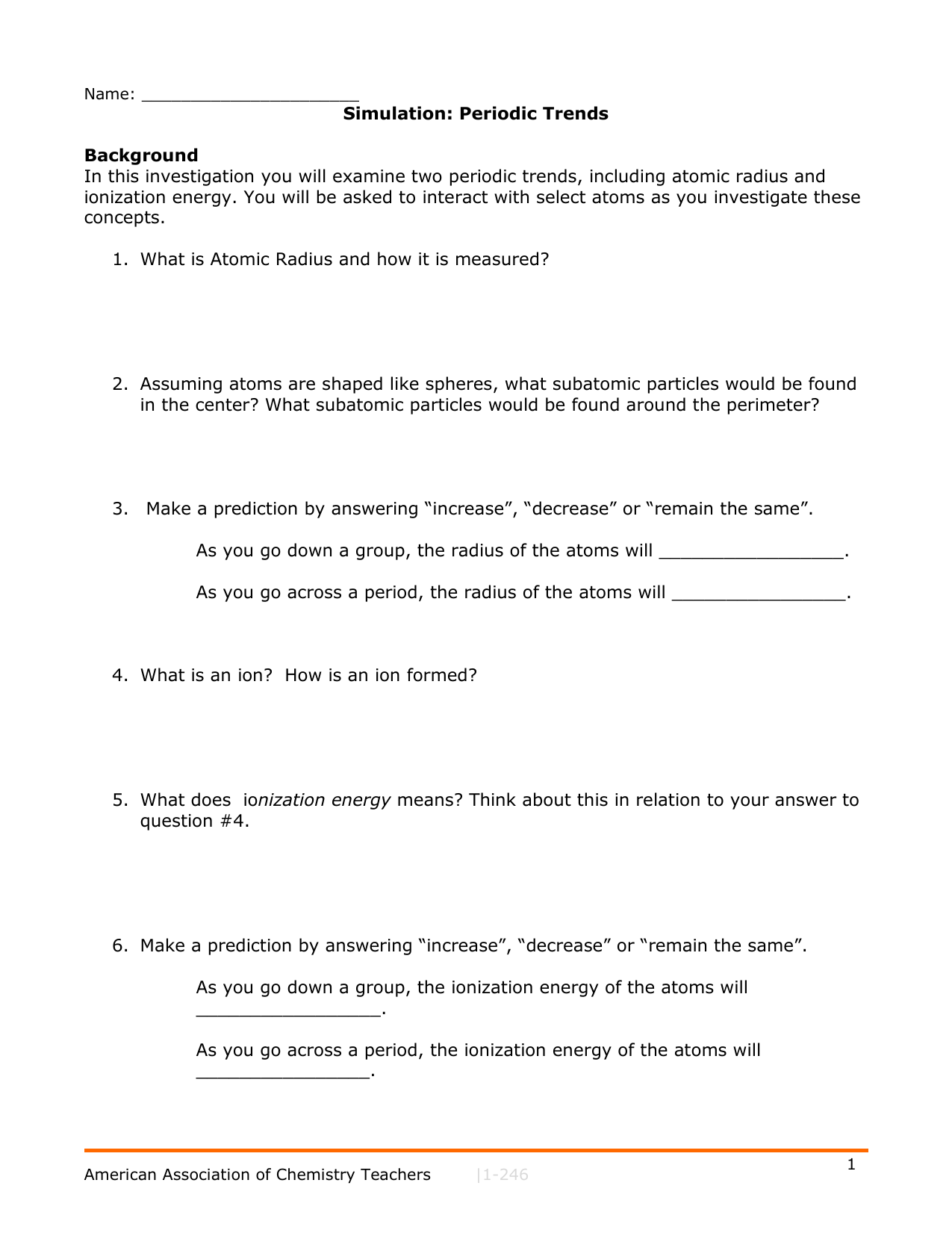
Periodic Trends Atomic Radius Ionization Energy Worksheet
Understanding Atomic Radius Trends
Atomic radius trends are a fundamental concept in chemistry, and understanding them is essential for predicting how elements will behave. As you move from left to right across a period, the atomic radius decreases due to the increasing number of protons in the nucleus, which pulls the electrons closer. On the other hand, as you move down a group, the atomic radius increases due to the addition of new energy levels. By recognizing these trends, students can make predictions about the properties of elements and how they will interact with other elements.
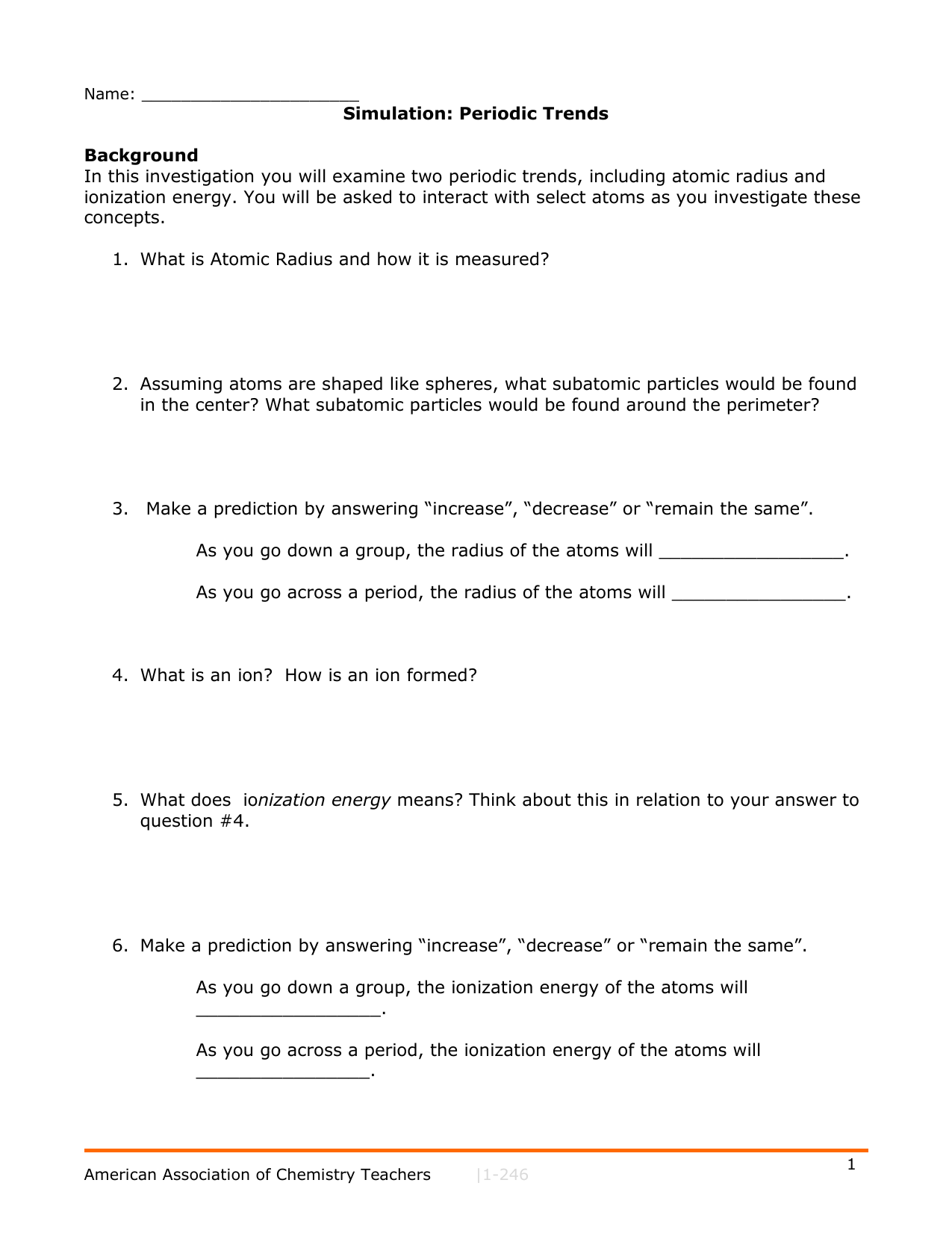
Periodic Trends Atomic Radius Ionization Energy Worksheet
Exploring Ionization Energy Trends
Ionization energy trends are another critical concept in chemistry, and they are closely related to atomic radius trends. Ionization energy increases as you move from left to right across a period due to the increasing number of protons, which makes it more difficult to remove an electron. On the other hand, ionization energy decreases as you move down a group due to the addition of new energy levels, which makes it easier to remove an electron. By understanding these trends, students can predict how elements will behave in different chemical reactions and make informed decisions about their properties.
Applying Periodic Trends to Real-World Problems
Applying periodic trends to real-world problems is a crucial skill for chemistry students and educators. By recognizing patterns and trends in the periodic table, students can make predictions about the properties of elements and how they will behave in different situations. For example, understanding atomic radius and ionization energy trends can help students predict how elements will react with other elements, which is essential for designing new materials and developing new technologies. By applying these concepts to real-world problems, students can develop a deeper understanding of chemistry and its relevance to everyday life.
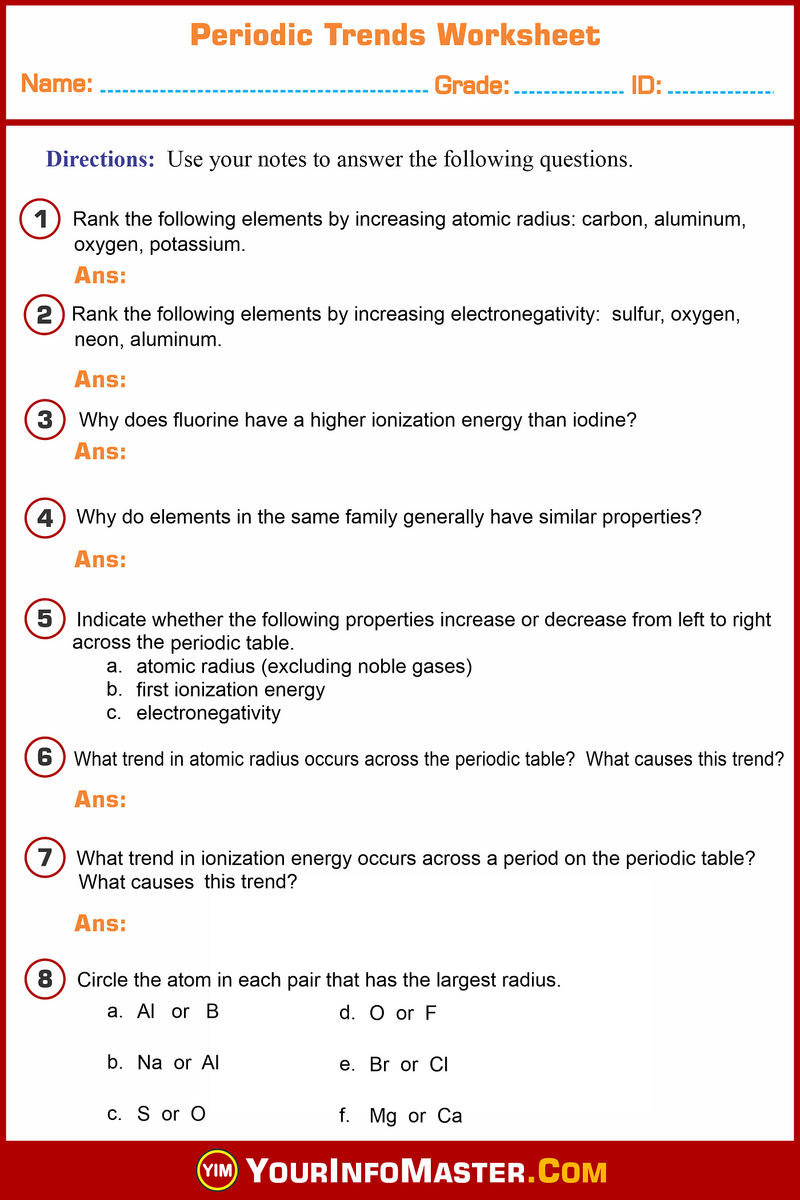
Periodic Trends Worksheet With Answers Your Info Master By Addison Smith Medium
In conclusion, mastering periodic trends is essential for success in chemistry, and a periodic trends atomic radius and ionization energy worksheet is a valuable tool for achieving this goal. By working through exercises and applying these concepts to real-world problems, students can develop a thorough understanding of atomic radius and ionization energy trends and how they relate to other periodic properties. With this knowledge, students can make informed decisions about the properties of elements and how they will behave in different chemical reactions, which is critical for advancing our understanding of chemistry and developing new technologies.
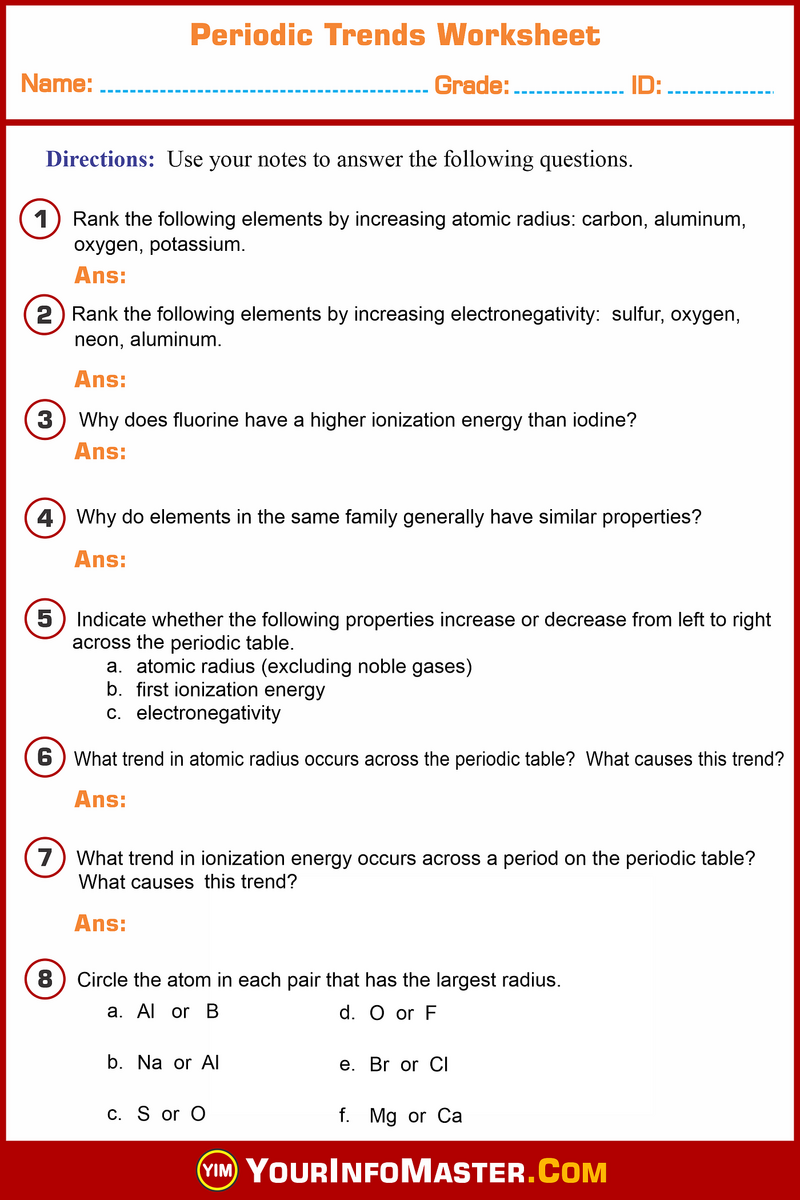
Periodic Trends Worksheet With Answers Your Info Master By Addison Smith Medium
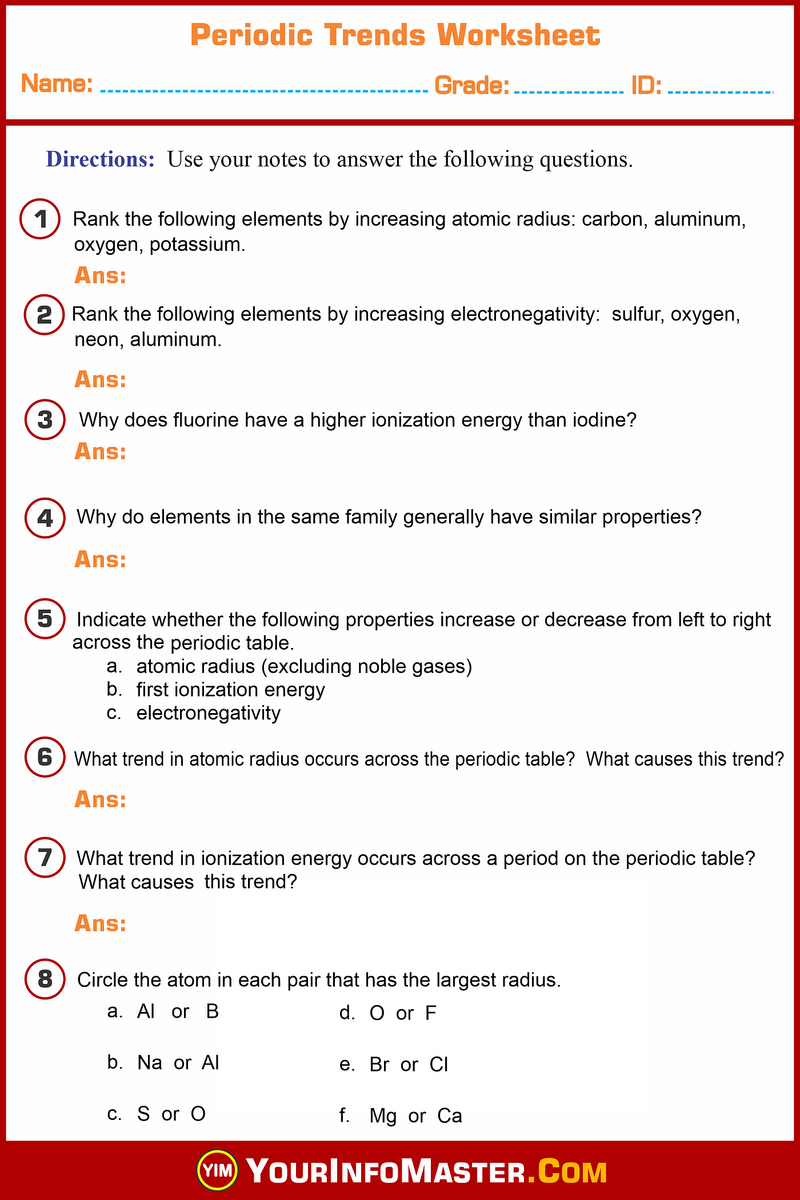
Periodic Trends Worksheet With Answers Your Info Master By Addison Smith Medium